Matthew A. Davis
Operations · Corporate Development · Design & Communications · Independent R&D
Shared Health Services · 2025 — 2026
Tools
Clinical and operational instruments built for hospital wound care and hyperbaric programs. Three things are true of all of them: each is written to drop into any partner site without editing, each is sourced back to the record it rests on, and each ends in the gaps a reader still has to close. A sample — these are shipped documents, in use.
Three Instruments, Three Readers
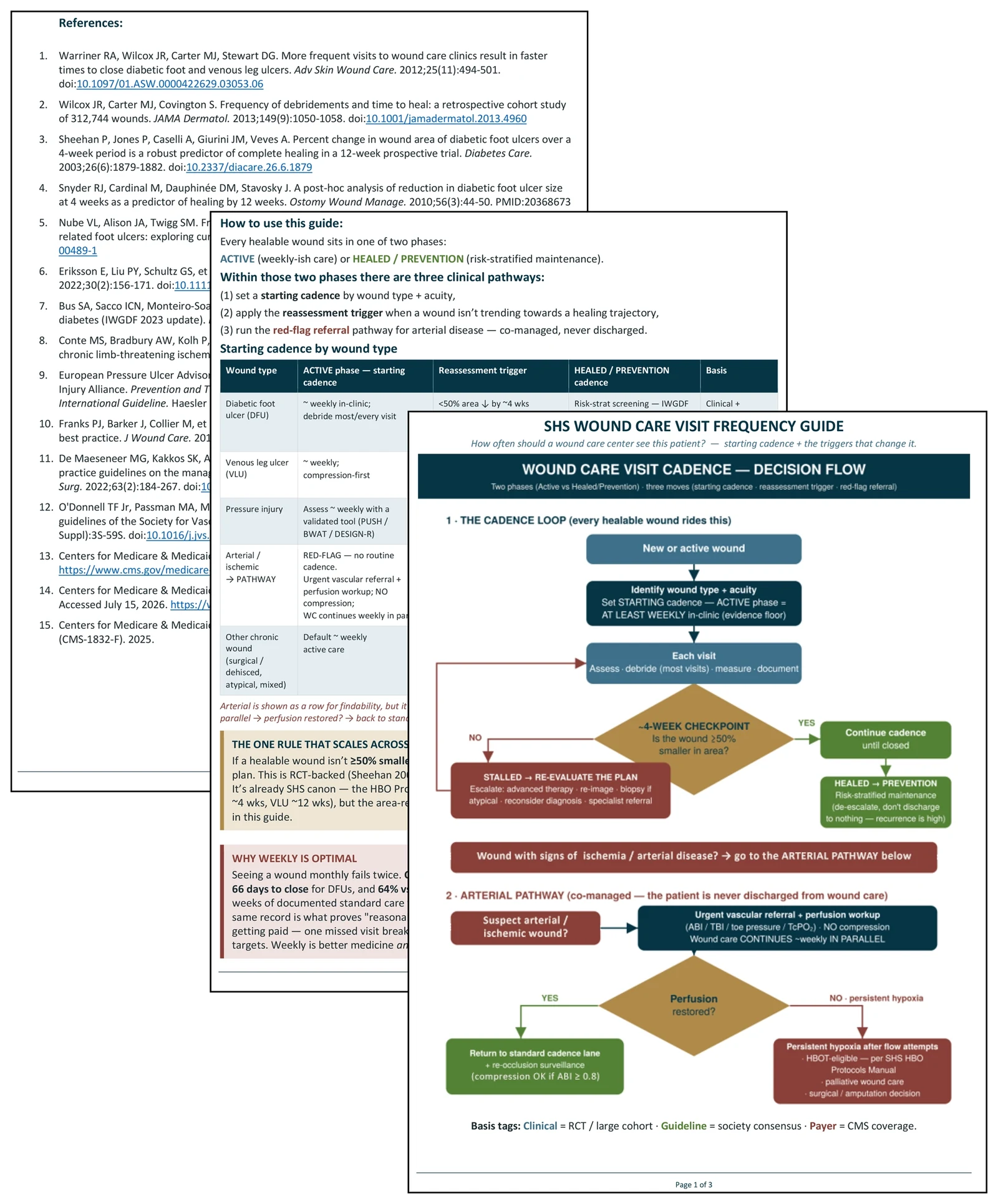
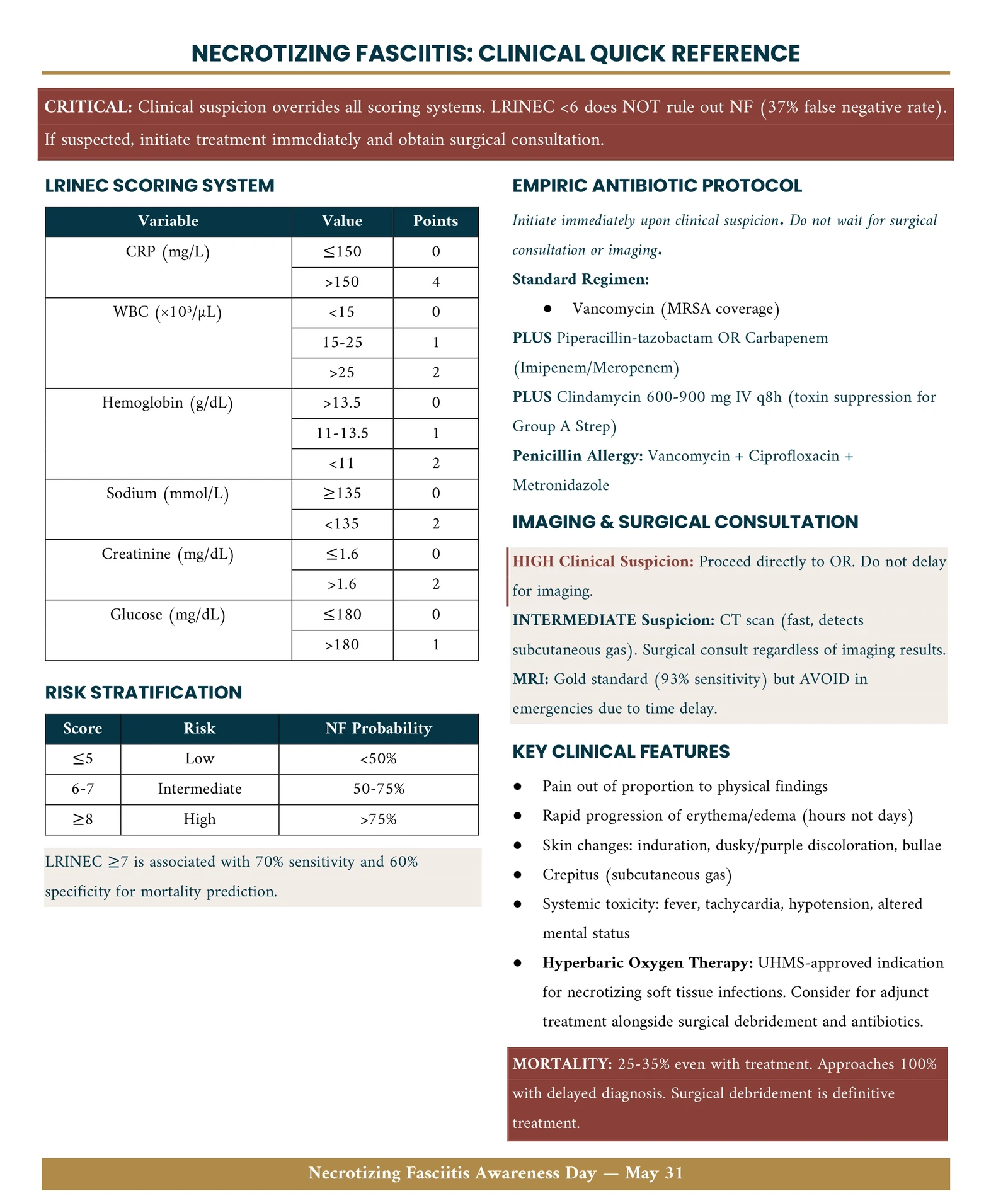
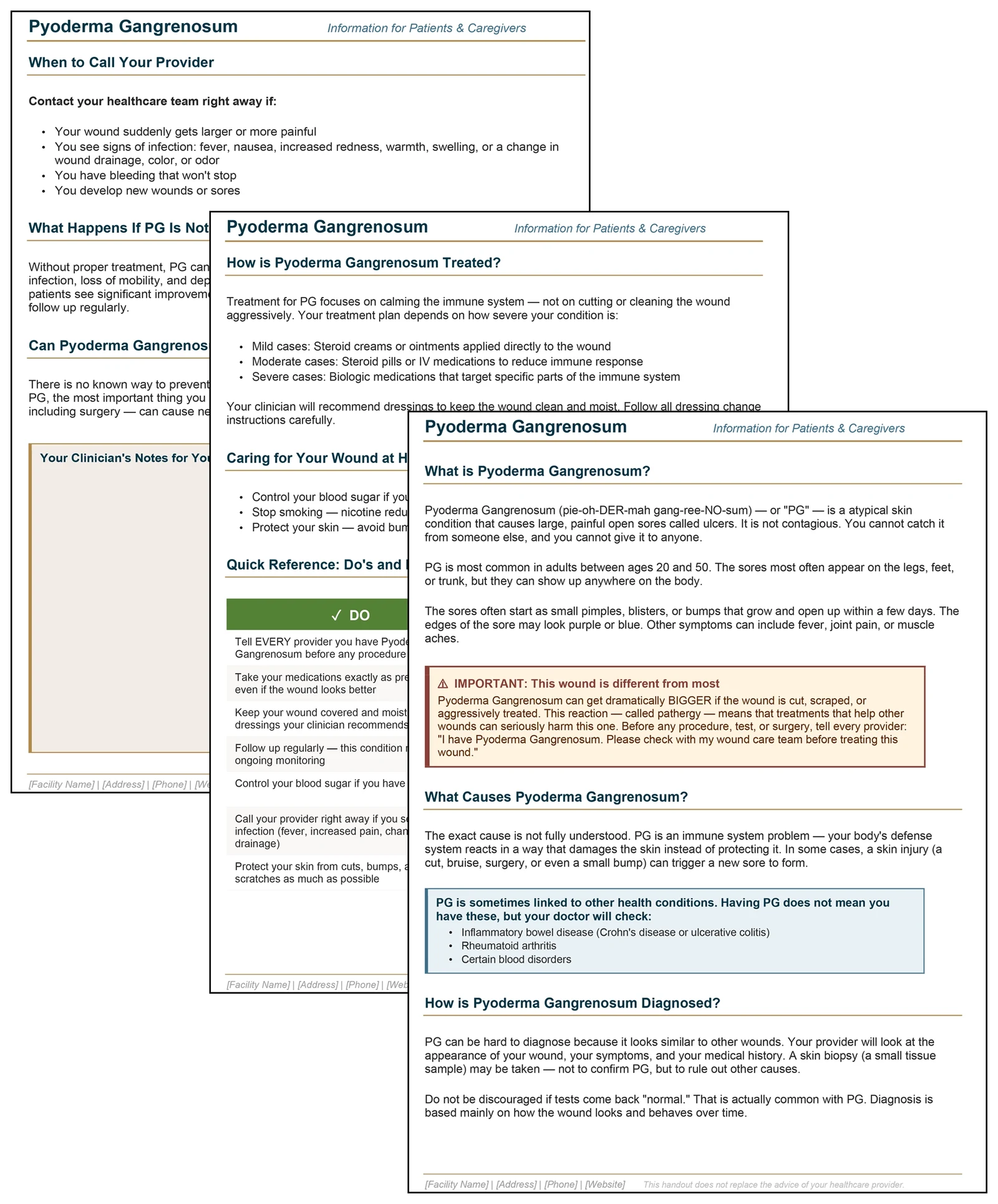
The same discipline at three registers. A program director setting visit cadence, a physician at two in the morning deciding whether to go to the operating room, and a patient trying to understand a diagnosis nobody has explained yet — none of them can use the others’ document. The first carries its own page of references; the second puts red on exactly two things, both of which kill; the third hands the reader a sentence to say out loud to the next provider who touches the wound.
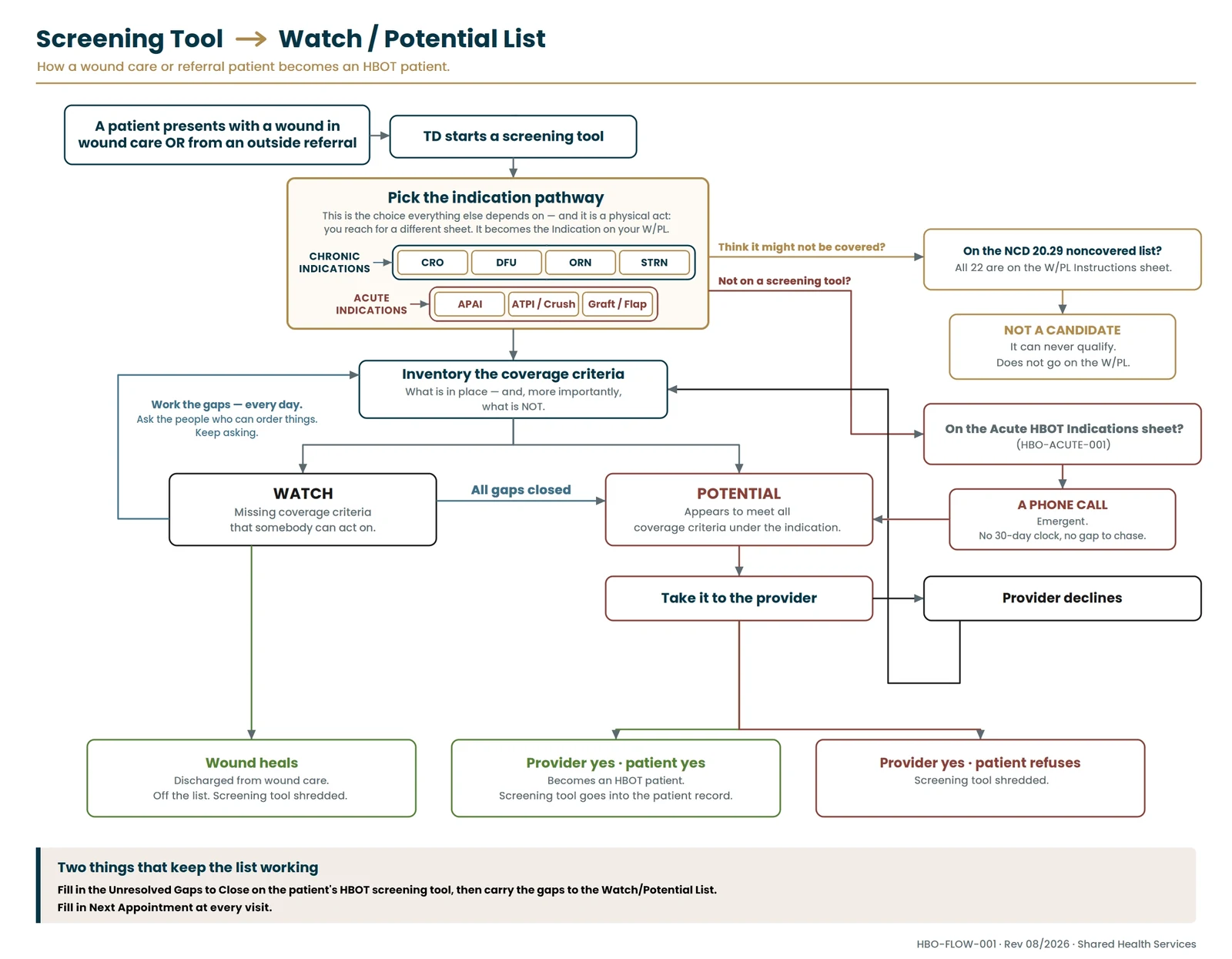
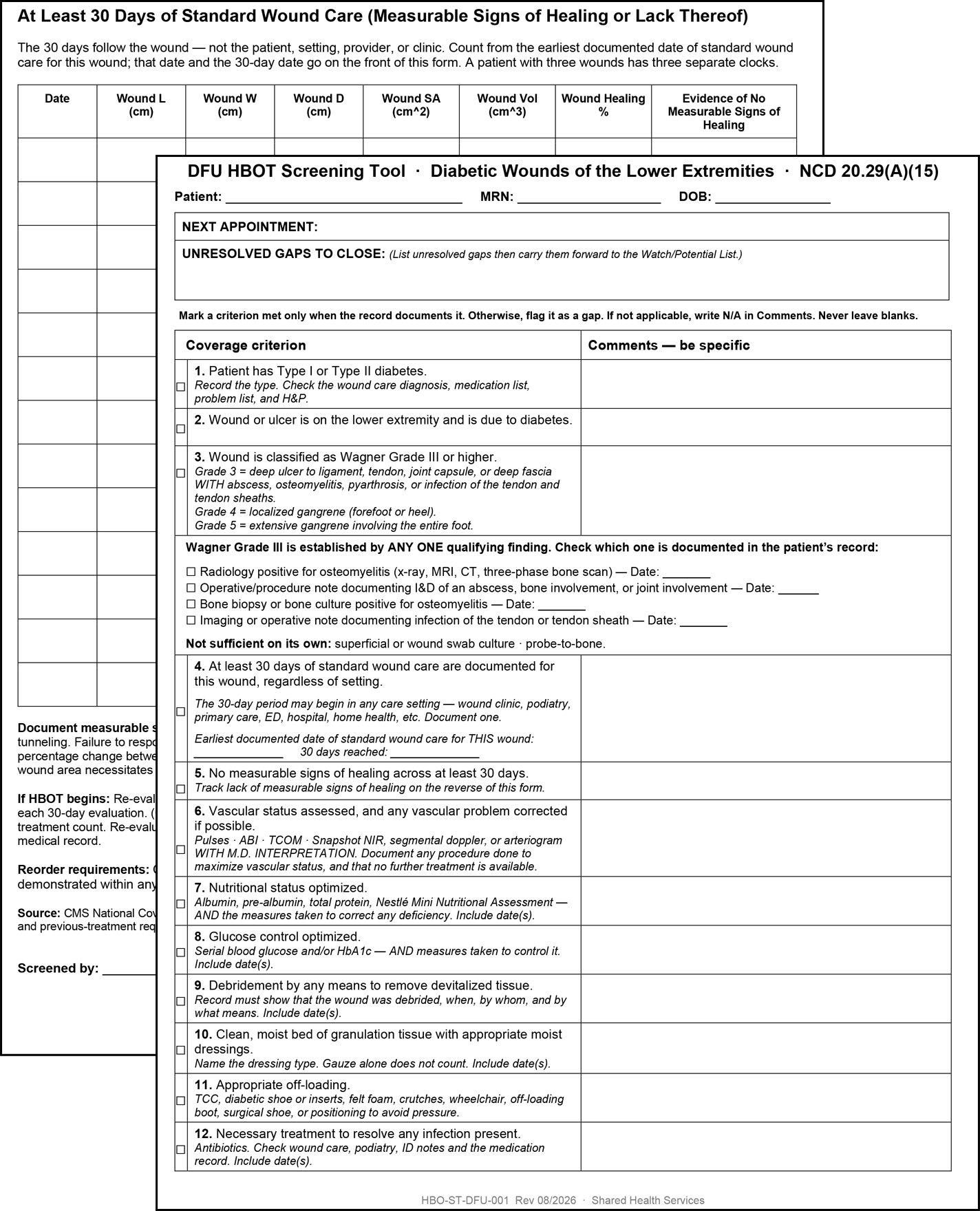
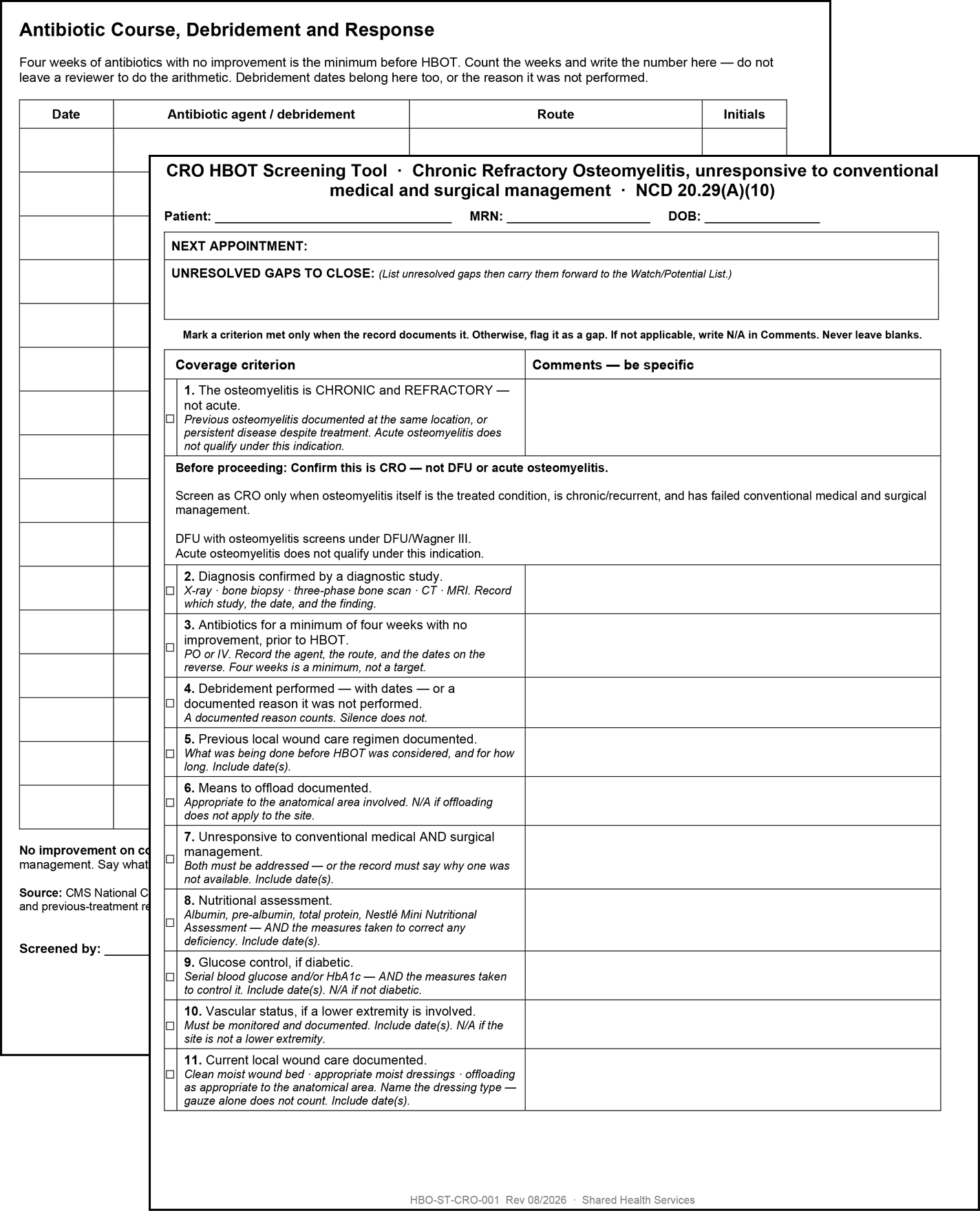
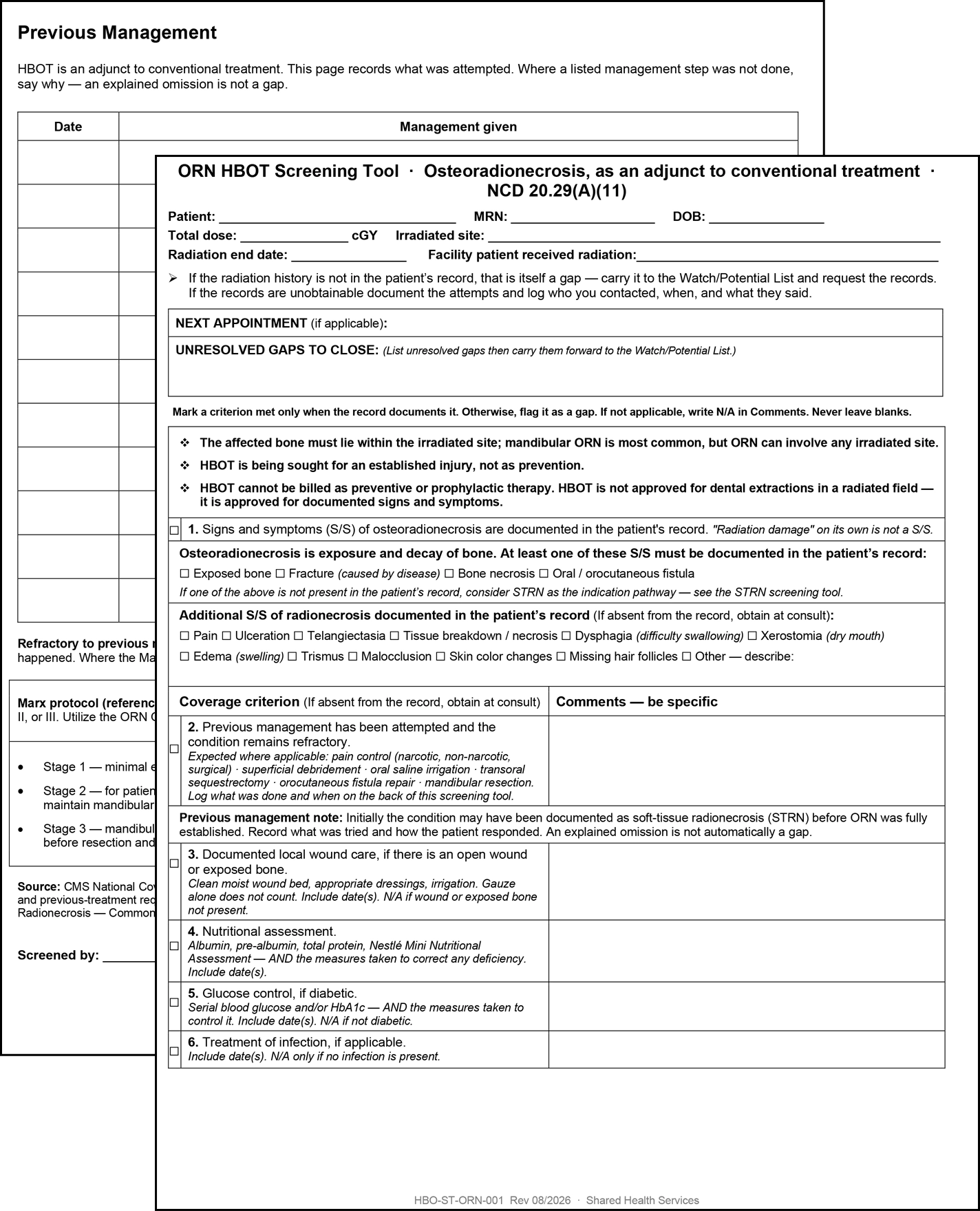
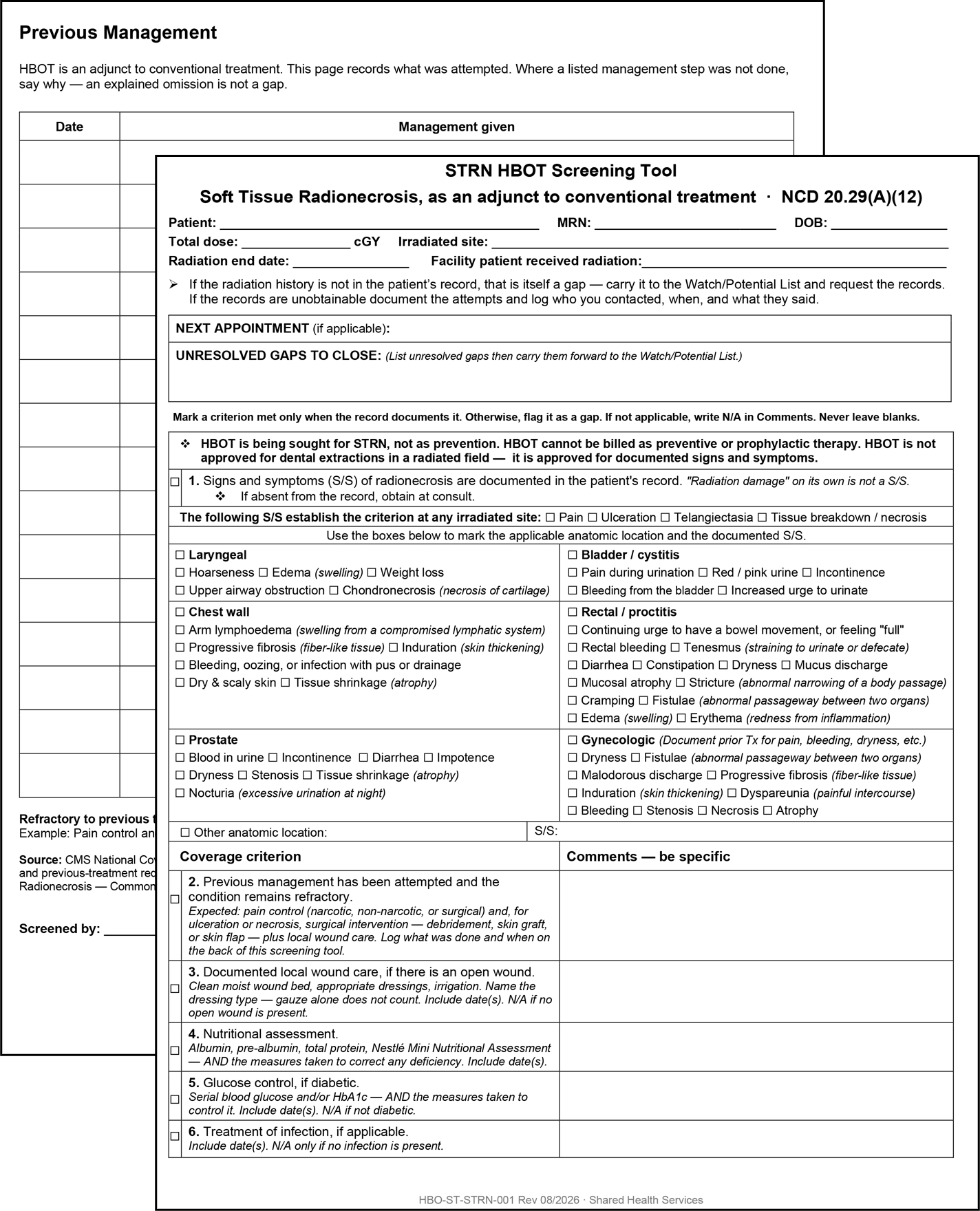
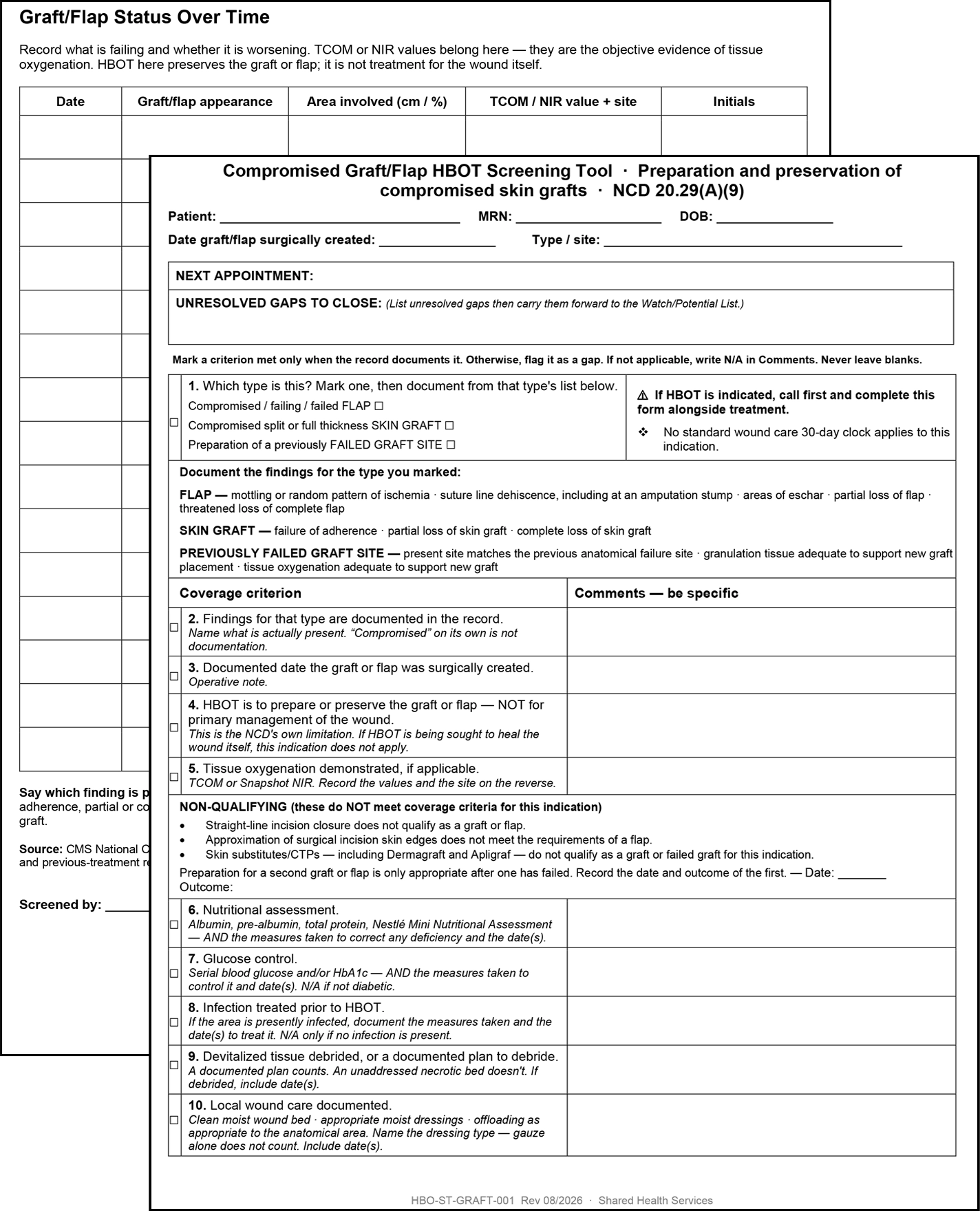
The HBOT Screening System
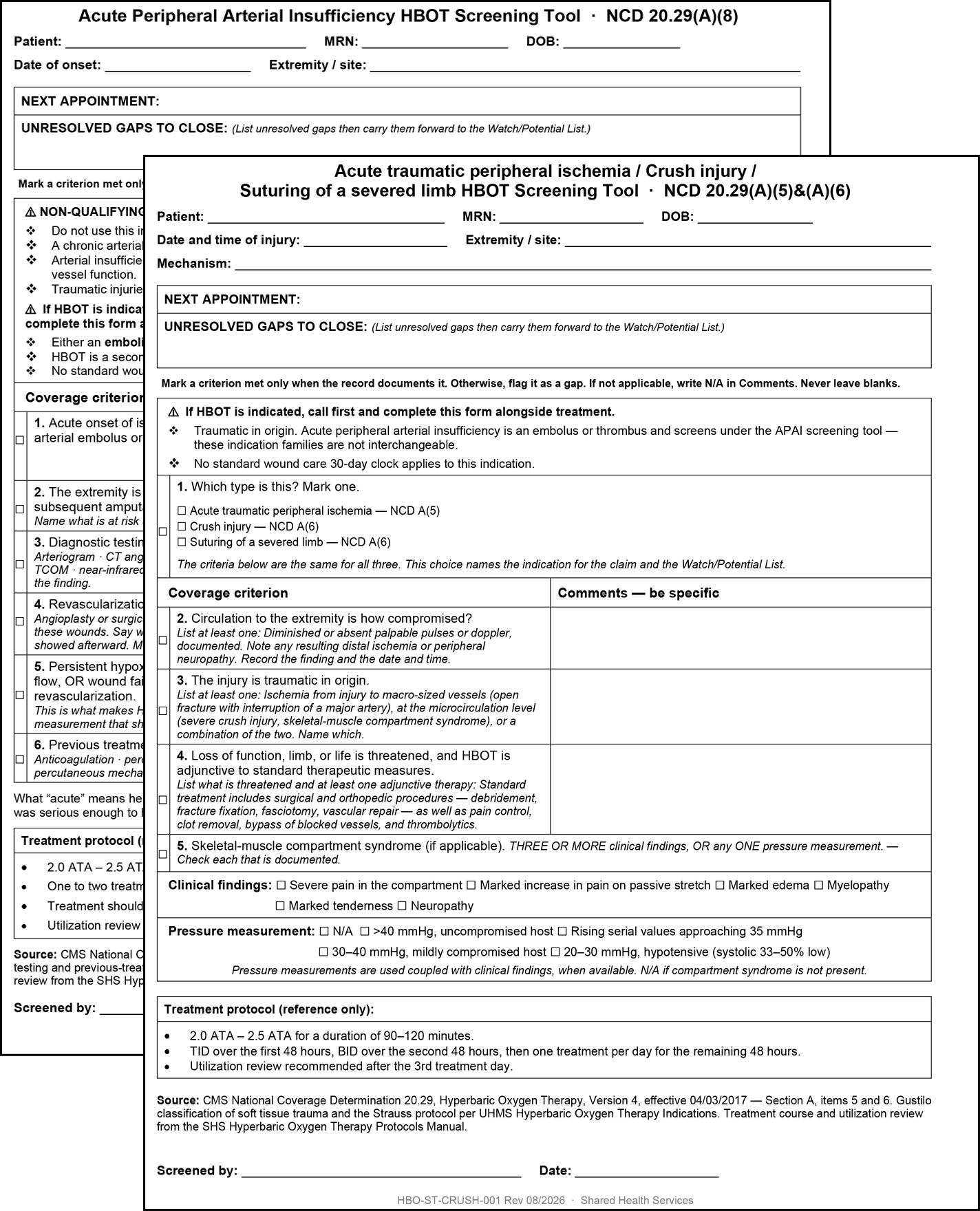
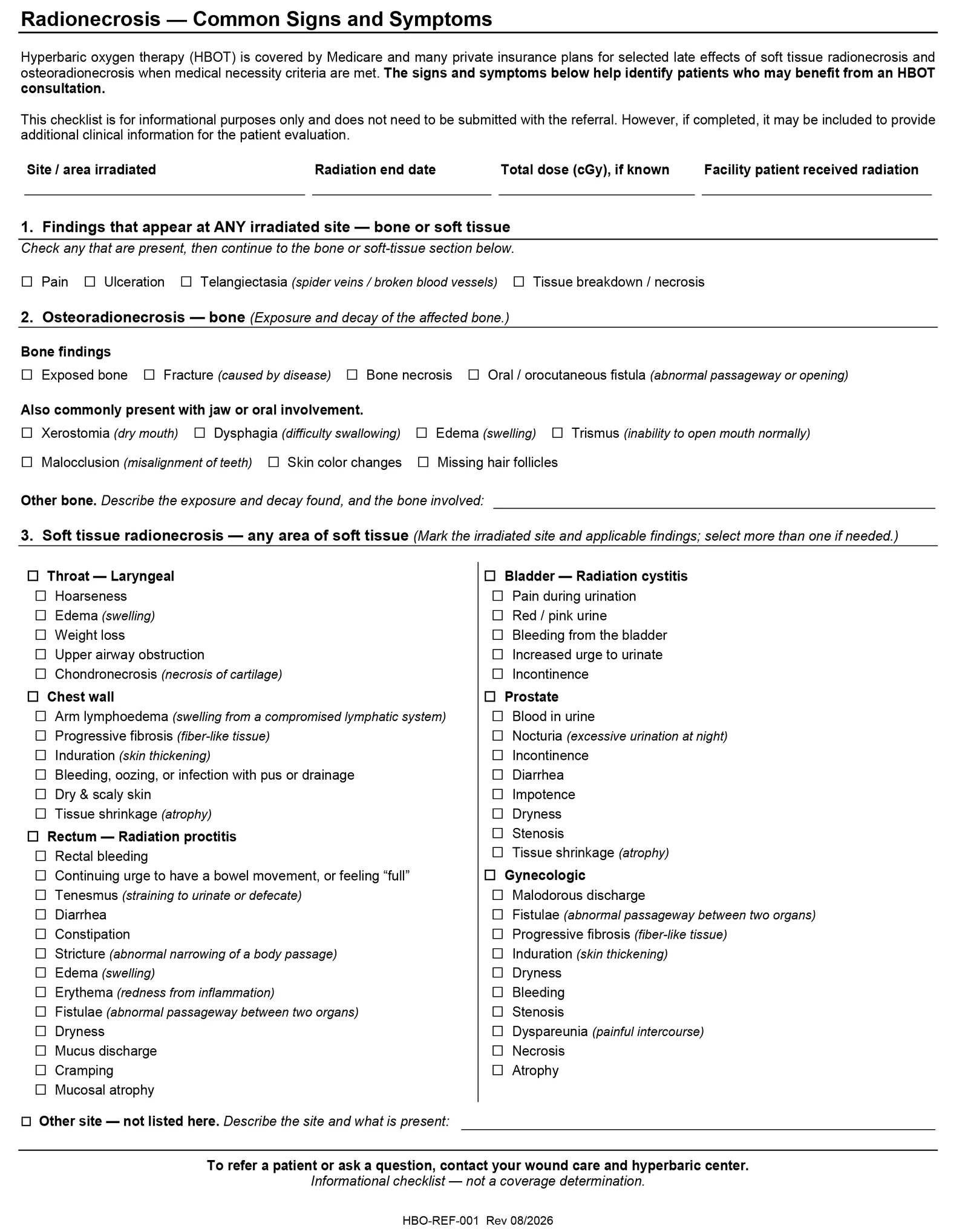
One form covering every indication became seven, one per covered indication under CMS NCD 20.29 — because a single universal form makes every user wade through six irrelevant sections to reach theirs. Each tool carries that indication’s coverage criteria and ends with the criteria not yet documented in the record: the gaps to close, written so somebody can close them. Those gaps carry onto a weekly watch and potential list the HBOT and wound care teams review together, and a patient who does not yet qualify stays on it with the reason named rather than falling off. Throughout, the harder half is stated too — what doesn’t qualify, which is where programs actually get burned.
Coverage and the Strictest Pathway
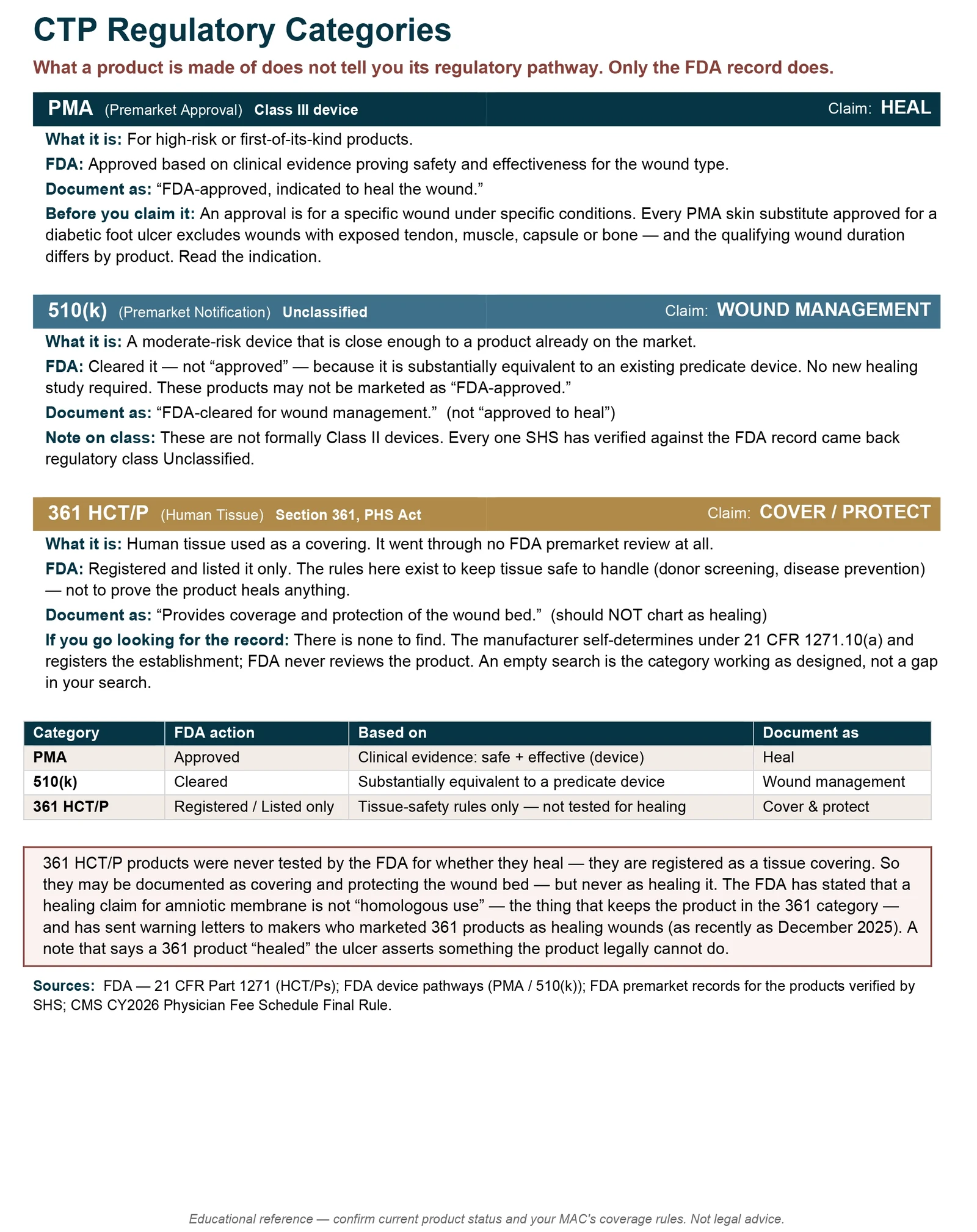
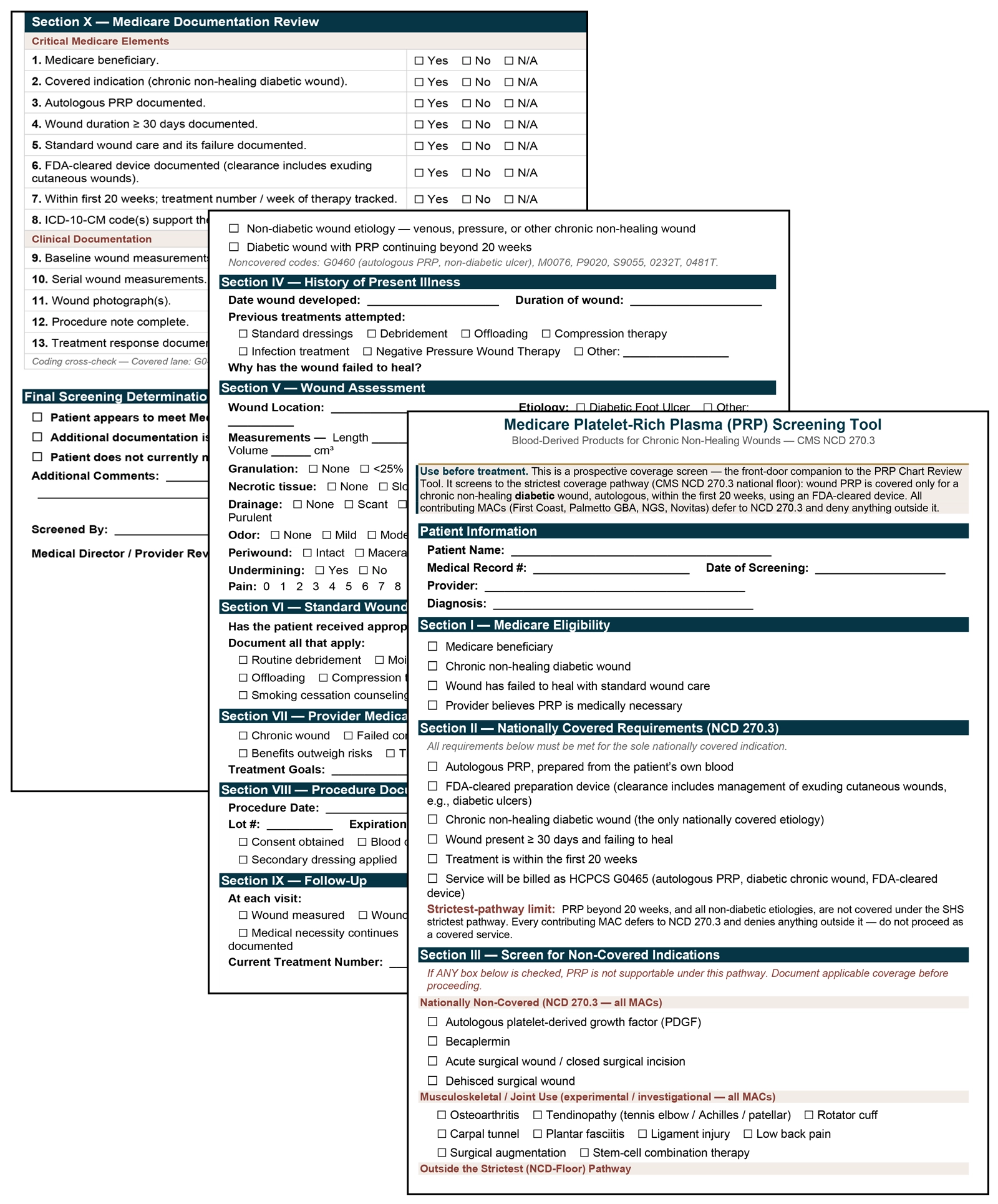
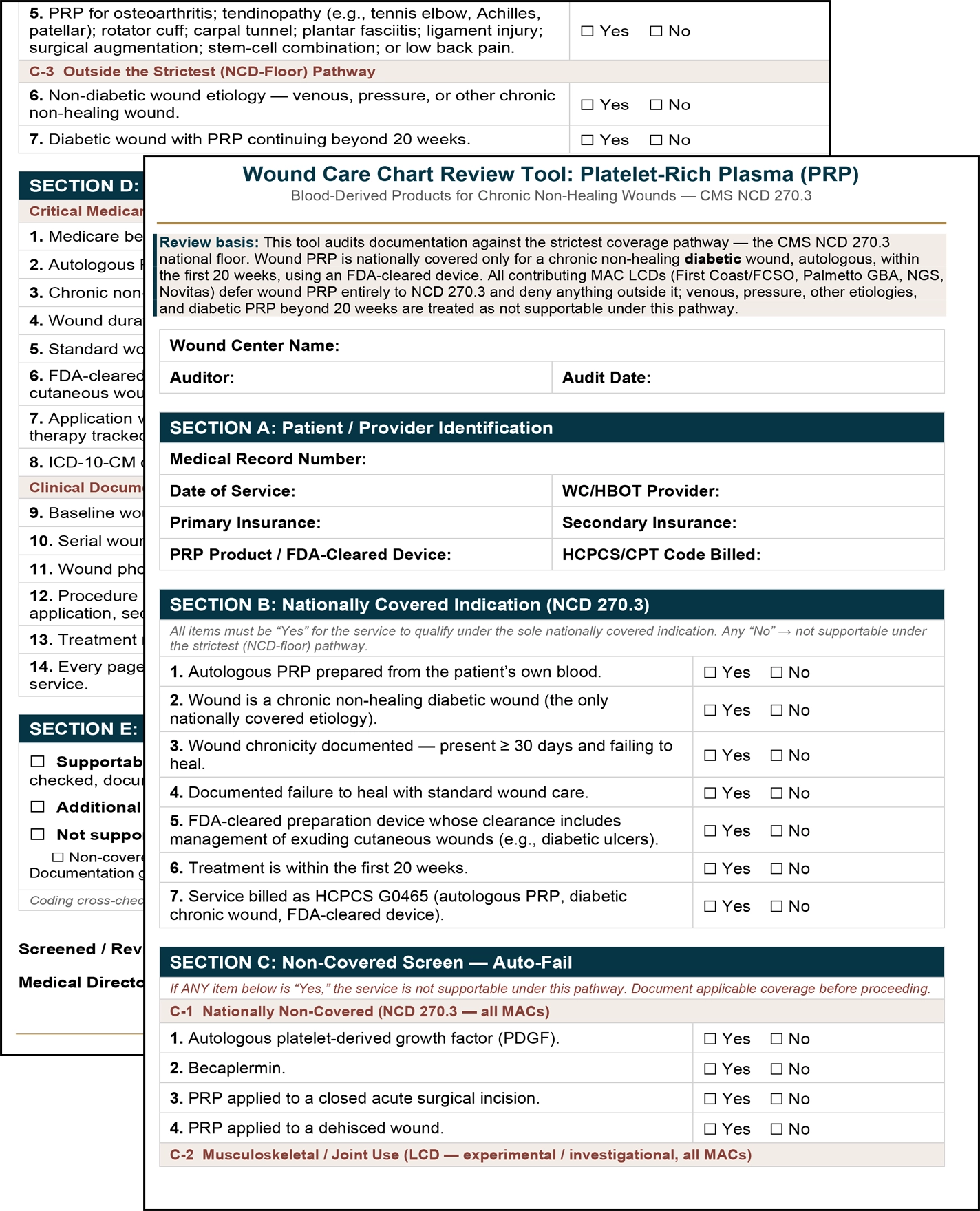
Three documents about the gap between what a product does and what the record says it is. The first exists because what a product is made of does not determine its regulatory pathway — only the FDA record does, and a tissue product registered as a covering cannot be charted as healing anything. The other two are a matched pair: screen the patient before treatment, audit the chart after billing. Both are written to the strictest national floor rather than to any one jurisdiction — every contributing MAC defers to the national determination and denies outside it, so one document is correct everywhere instead of four documents each correct once.
Assessment at the Bedside
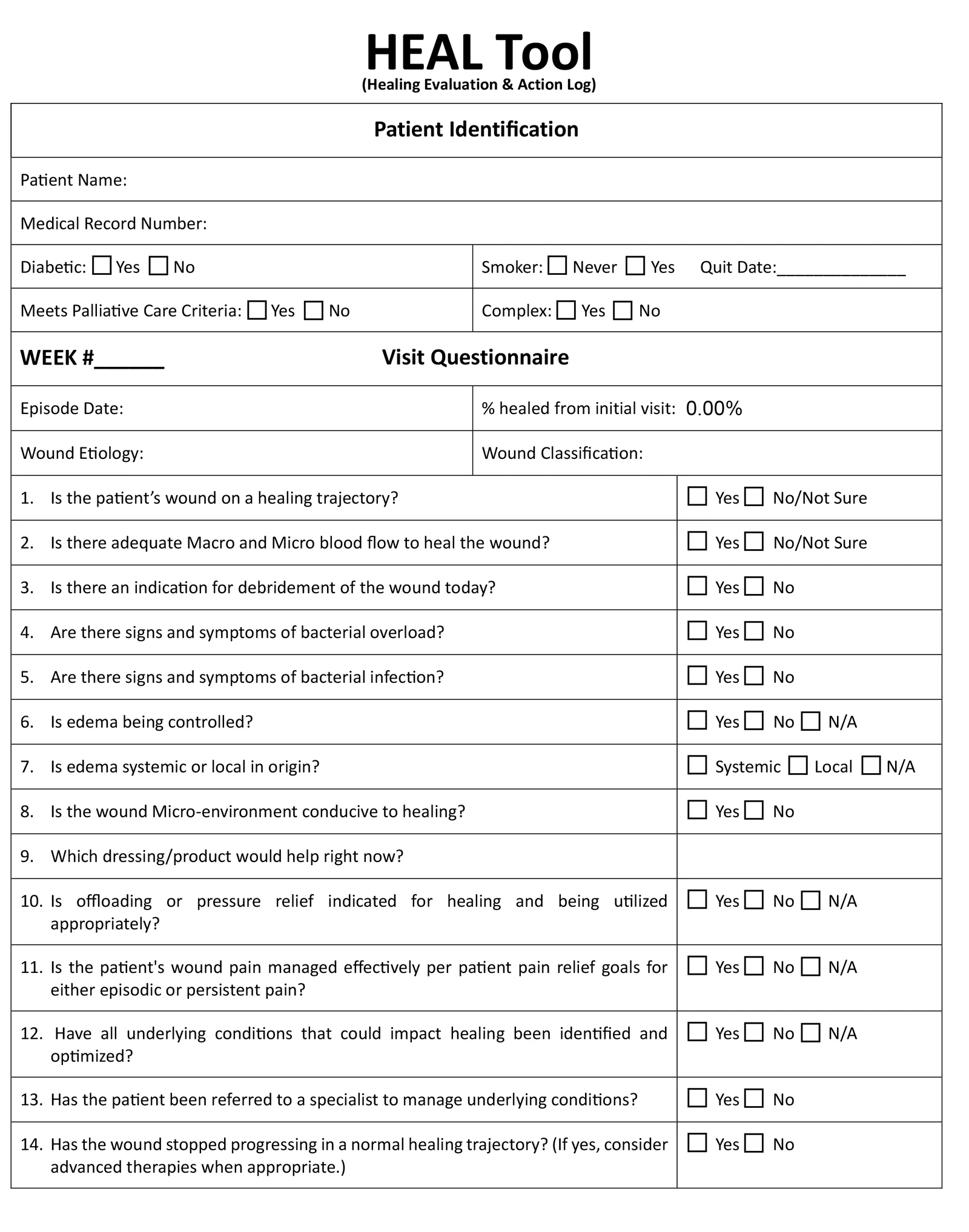
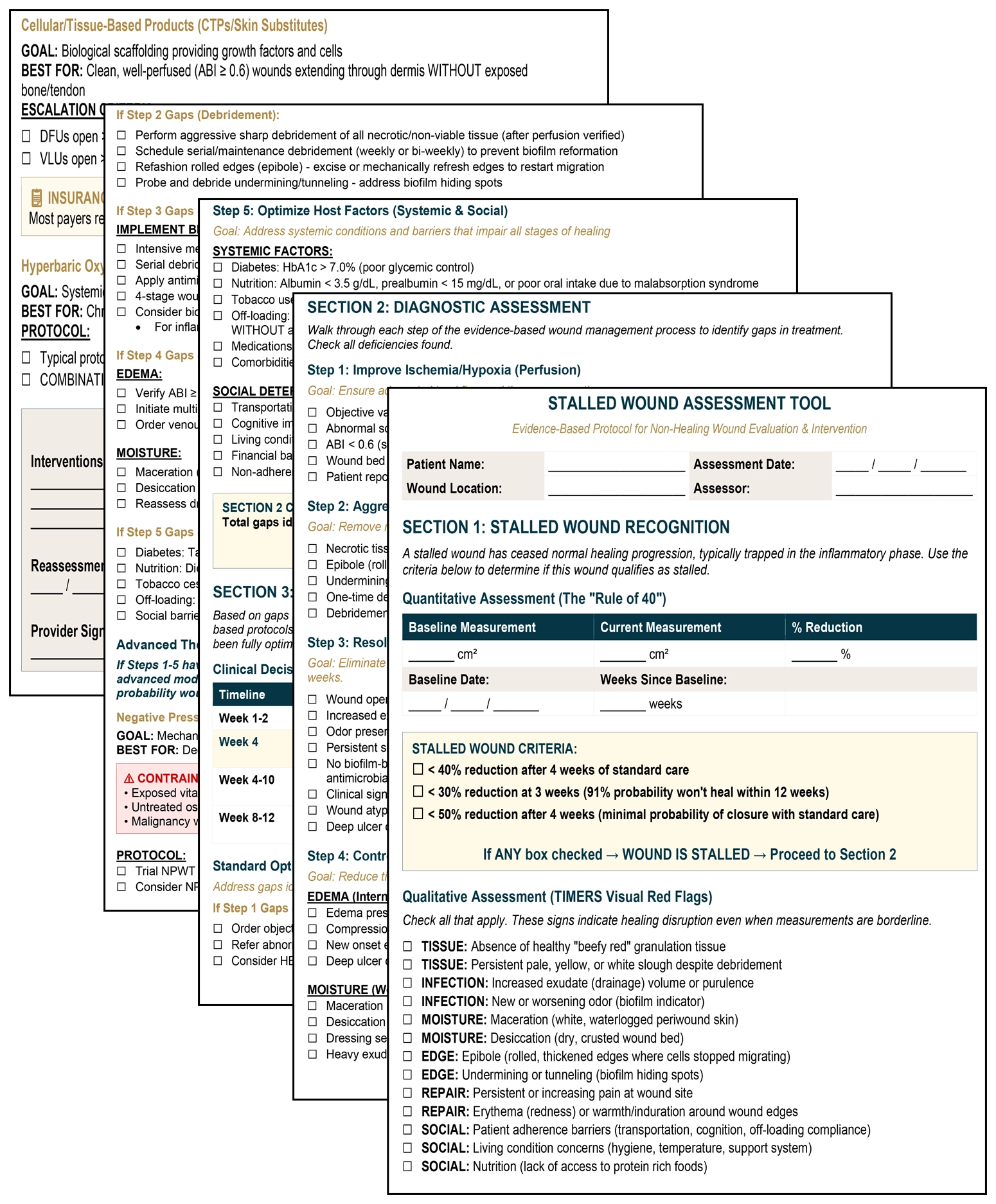
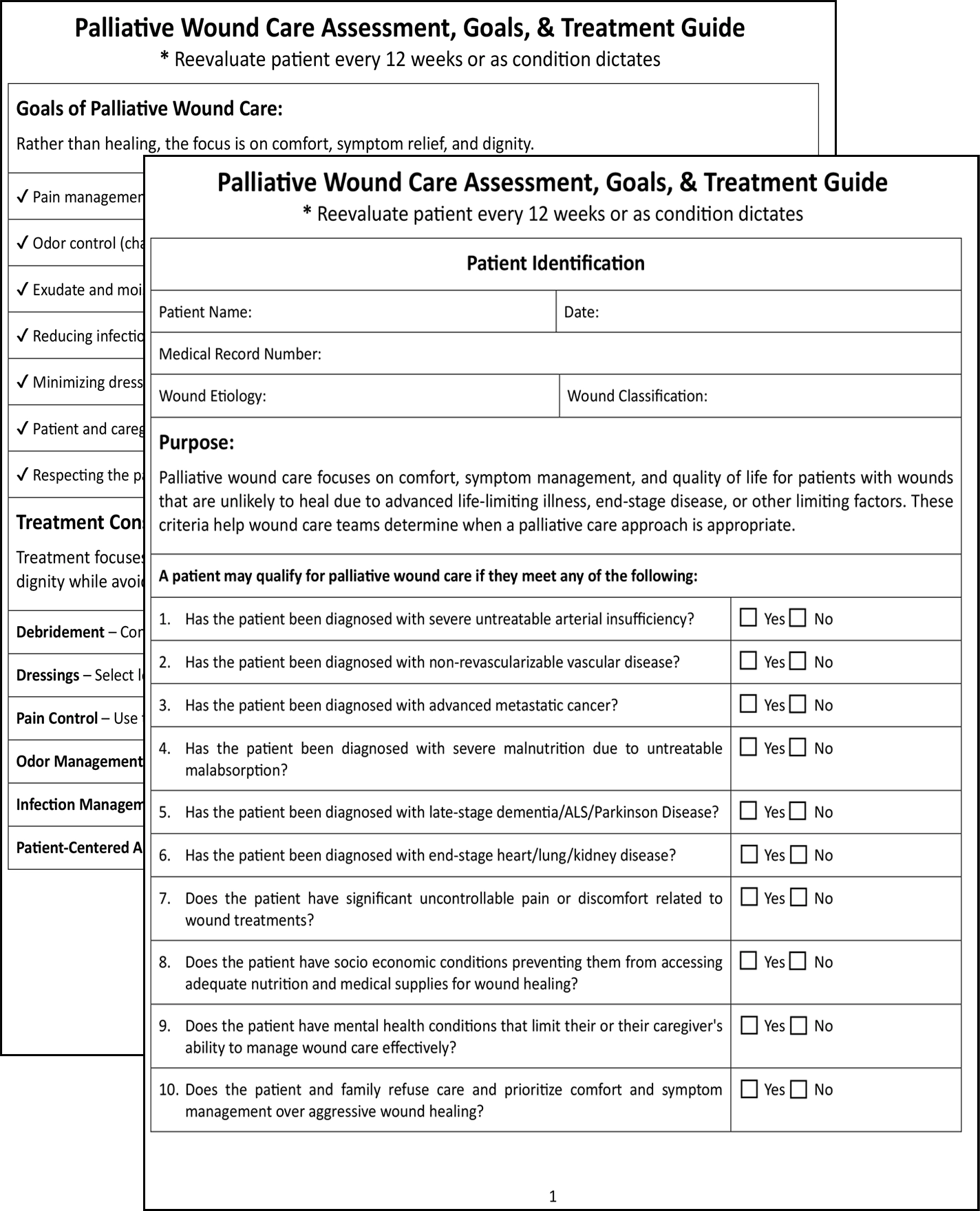
Three questions asked in order, weeks apart. Is this wound healing — a visit questionnaire that turns a clinician’s impression into fourteen answerable questions. Has it stopped — a quantitative threshold and a set of visual red flags that catch a stall even when the measurements look borderline. And should healing still be the goal at all — criteria that make comfort and quality of life a documented clinical decision rather than something that happens by default when nothing else works.
Referral, Review, and the Business Case
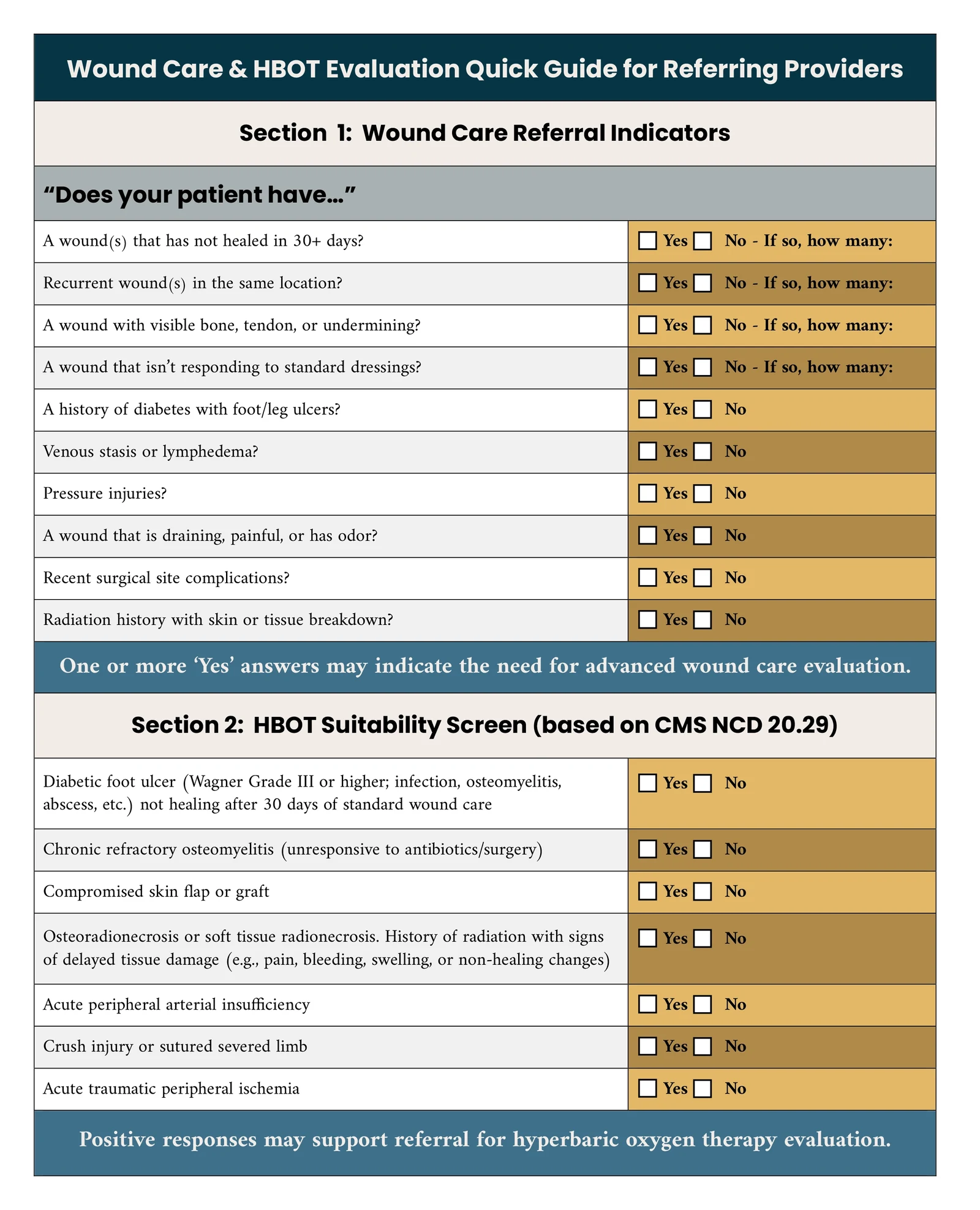
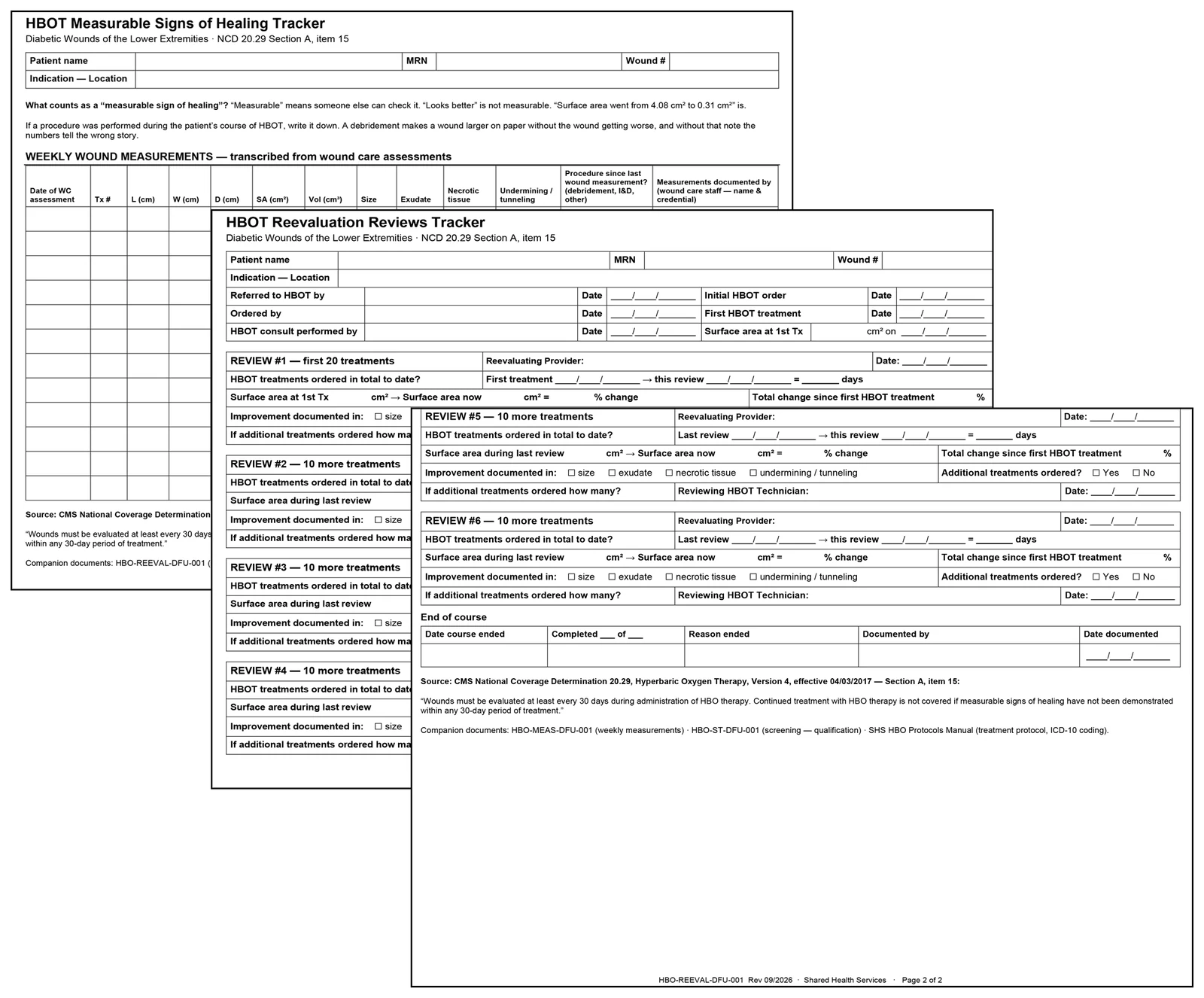
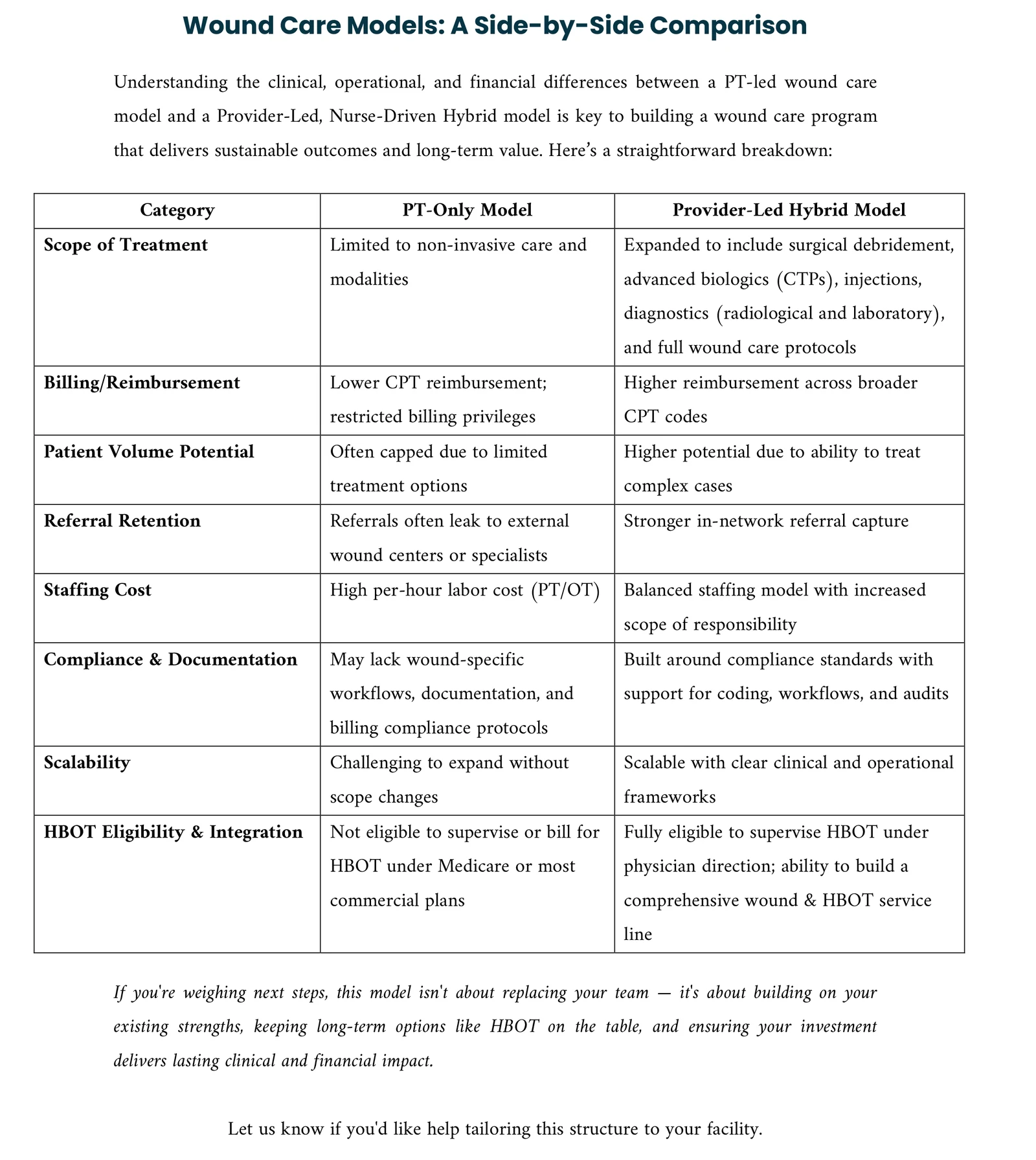
The edges of the episode. At the front door, an instrument for a referring provider deciding whether this wound belongs in a wound centre at all — tick boxes, no typing. In the middle, the two trackers that document whether a wound is actually improving on the cadence the payer requires, because the same record that proves the care also proves the claim. And at the outside edge, the comparison a hospital reads before any of the rest exists: what a wound care programme costs, returns and makes possible, set against the model it would replace.